AS SEEN ON








By Ricky Gomulka, Founder & Managing Partner, JetLevel Aviation
The answer
How much does it cost to charter a private jet?
Chartering a private jet costs a median of $8,917 to $23,681 for a one-way trip under 500 nautical miles, depending on the aircraft class, and $115,009 to $153,985 for a trip over 3,000 nautical miles. Charter is priced per aircraft, not per seat, so the total is the same whether two passengers fly or eight.
These are all-in figures from JetLevel's own quote data. They include aircraft positioning, crew expenses, landing and handling fees, and the 7.5% federal excise tax, because that is how a charter is invoiced.
Trip pricing
What a one-way private jet trip costs
Pick the row that matches your trip length. The median is the midpoint of the data: half of trips priced below it, half above. The typical range runs from the 25th to the 75th percentile, which says more about what a trip will cost than the extremes do.
| Trip Distance | Aircraft Class | Median Price | Typical Range | Sample Size |
|---|---|---|---|---|
| Under 500 nm | Turboprop | $9,362 | $7,409–$11,303 | 179 |
| Very light | $8,917 | $7,290–$10,669 | 52 | |
| Light | $12,866 | $10,760–$14,867 | 163 | |
| Midsize | $14,554 | $11,871–$16,345 | 71 | |
| Super midsize | $23,681 | $16,428–$28,960 | 20 | |
| Heavy | $22,492 | $18,279–$32,819 | 22 | |
| 500 to 1,000 nm | Turboprop | $14,531 | $12,900–$16,374 | 51 |
| Very light | $13,885 | $12,679–$18,710 | 20 | |
| Light | $18,908 | $16,253–$21,403 | 329 | |
| Midsize | $21,429 | $18,720–$24,515 | 197 | |
| Super midsize | $26,915 | $22,494–$31,950 | 74 | |
| Heavy | $34,425 | $27,960–$41,594 | 66 | |
| Ultra long range | $40,989 | $39,812–$59,450 | 12 | |
| 1,000 to 1,800 nm | Light | $22,903 | $20,228–$29,675 | 88 |
| Midsize | $30,755 | $26,890–$36,561 | 107 | |
| Super midsize | $38,731 | $33,325–$44,945 | 99 | |
| Heavy | $48,950 | $44,539–$61,700 | 35 | |
| Ultra long range | $63,450 | $51,772–$83,784 | 8 | |
| 1,800 to 3,000 nm | Midsize | $37,431 | $32,762–$40,519 | 9 |
| Super midsize | $42,860 | $37,850–$51,357 | 56 | |
| Heavy | $53,545 | $47,816–$63,973 | 49 | |
| Ultra long range | $83,815 | $64,150–$94,900 | 22 | |
| Over 3,000 nm | Heavy | $115,009 | $87,735–$123,892 | 13 |
| Ultra long range | $153,985 | $126,791–$215,000 | 59 |
Trip pricing
What a round trip costs
A round trip is not double a one-way. The aircraft is already positioned, so the second leg usually costs less than the first, and on short trips the operator's daily minimum starts to set the price instead of the distance.
| Trip Distance | Aircraft Class | Median Price | Typical Range | Sample Size |
|---|---|---|---|---|
| Under 500 nm | Turboprop | $15,522 | $12,230–$18,294 | 244 |
| Very light | $14,284 | $11,846–$16,916 | 43 | |
| Light | $18,989 | $15,608–$22,660 | 144 | |
| Midsize | $23,508 | $20,983–$27,597 | 30 | |
| Heavy | $41,466 | $36,619–$45,794 | 18 | |
| 500 to 1,000 nm | Turboprop | $24,701 | $19,757–$27,749 | 22 |
| Very light | $22,816 | $16,949–$24,284 | 6 | |
| Light | $32,801 | $26,917–$36,936 | 125 | |
| Midsize | $41,670 | $34,995–$46,783 | 82 | |
| Super midsize | $51,667 | $44,350–$59,146 | 25 | |
| Heavy | $68,613 | $57,640–$81,808 | 48 | |
| 1,000 to 1,800 nm | Light | $49,963 | $38,833–$56,345 | 37 |
| Midsize | $57,439 | $48,342–$63,963 | 50 | |
| Super midsize | $65,727 | $59,891–$75,901 | 59 | |
| Heavy | $102,848 | $78,979–$120,494 | 40 | |
| Ultra long range | $119,884 | $82,775–$136,437 | 6 | |
| 1,800 to 3,000 nm | Super midsize | $83,989 | $77,872–$88,973 | 28 |
| Heavy | $99,672 | $92,837–$130,138 | 22 |
Hourly pricing
Private jet hourly rates
All-in hourly rates by aircraft class
All-in cost per block hour · USD · based on qualifying quote data
| Aircraft Class | Median Hourly Rate | Typical Range | Sample Size |
|---|---|---|---|
| Turboprop | $5,577 | $4,719–$6,496 | 315 |
| Very light jet | $6,175 | $4,906–$7,093 | 65 |
| Light jet | $7,714 | $6,754–$8,814 | 453 |
| Midsize jet | $8,364 | $7,377–$9,575 | 400 |
| Super midsize jet | $10,055 | $8,807–$12,101 | 338 |
| Heavy jet | $12,644 | $10,277–$15,436 | 258 |
| Ultra long range jet | $15,749 | $13,213–$18,545 | 124 |
Why these hourly rates differ from advertised rates
Many published private jet hourly rates represent an aircraft's base or wet rate. Those figures may not reflect the full cost of a charter, which can also include aircraft positioning, crew expenses, airport and handling fees, and applicable taxes.
The hourly rates above are calculated differently. We take the total quoted trip price from qualifying quote data and divide it by the flight time for that trip. The result is an all-in hourly figure that reflects the effective cost of the charter rather than the aircraft's base operating rate.
For example, the median all-in rate for a light jet in our data is $7,714 per block hour. That figure should not be compared directly with a published base rate, because the two measure different things.
For comparing charter costs, total trip price remains the more meaningful measure. The hourly figures are provided as a standardized benchmark across aircraft classes.
Method
Where these numbers come from
Our own data. JetLevel is a broker. We price real trips across many operators every day, and every rate on this page is drawn from our own quote data, not third-party estimates. The dataset covers 3,220 qualifying quotes across 500 operators and 210 aircraft models.
All in. Every figure is a total trip price: aircraft, crew, fuel, positioning, landing and handling fees, and applicable taxes.
Median and typical range. The median is the midpoint of the data. The typical range runs from the 25th to the 75th percentile. Neither can be moved by a single unusual trip.
Qualifying quote data. A quote enters the dataset only when it meets our qualification criteria, and a price is published only where the data behind it is deep enough to support it. That is why some aircraft classes do not appear in every distance band.
Route pricing
Popular private jet routes
One-way medians on routes we price often. Each route page carries the full table for every aircraft class we hold data for.
| Route | Aircraft Class | Median Price | Sample Size | |
|---|---|---|---|---|
| New York to West Palm Beach | Midsize jet | $20,864 | 20 | View Route |
| NYC to Miami | Light jet | $18,285 | 11 | View Route |
| Los Angeles to Las Vegas | Midsize jet | $11,830 | 9 | View Route |
| Miami to Nassau | Turboprop | $6,442 | 7 | View Route |
| Burbank to Teterboro | Heavy jet | $46,151 | 7 | View Route |
| Los Angeles to Aspen | Light jet | $18,876 | 6 | View Route |
| Orlando to Greenwich | Midsize jet | $22,273 | 6 | View Route |
| Austin to Dallas | Turboprop | $8,825 | 5 | View Route |
Overview of Private Jet Charter Costs
Jetlevel Aviation offers private flights on a wide range of aircraft categories. The aircraft types within each category vary by price, range, interior space, passenger capacity, and air speed.
Seats
5
Range
1070 mi
Speed
250 mph
Turbo Prop
King Air 350
King Air 90, King Air 200, Pilatus PC-12, King Air 250, King Air 350, Piaggio Avanti, Beechcraft 1900
FROM $1,800/ Per Hour
Seats
4
Range
1100 mi
Speed
400 mph
Very Light Jet
Phenom 100
Citation Mustang, Eclipse 500, HondaJet, HondaJet Elite, Phenom 100, Phenom 100E, Vision Jet
FROM $3,000/ Per Hour
Seats
6
Range
1700 mi
Speed
450 mph
Light Jets
Citation CJ3
Citation CJ2, Citation CJ3, Citation Ultra, Hawker 400XP, Citation Encore, Nextant 400XTi
FROM $4,000/ Per Hour
Seats
6
Range
2100 mi
Speed
500 mph
Midsize Jet
Citation XLS
Citation Excel/XLS, Hawker 800XP, Hawker 900XP, Learjet 60, Citation Latitude, Gulfstream G150
FROM $4,500/ Per Hour
Seats
8
Range
2800 mi
Speed
525 mph
Super Midsize Jet
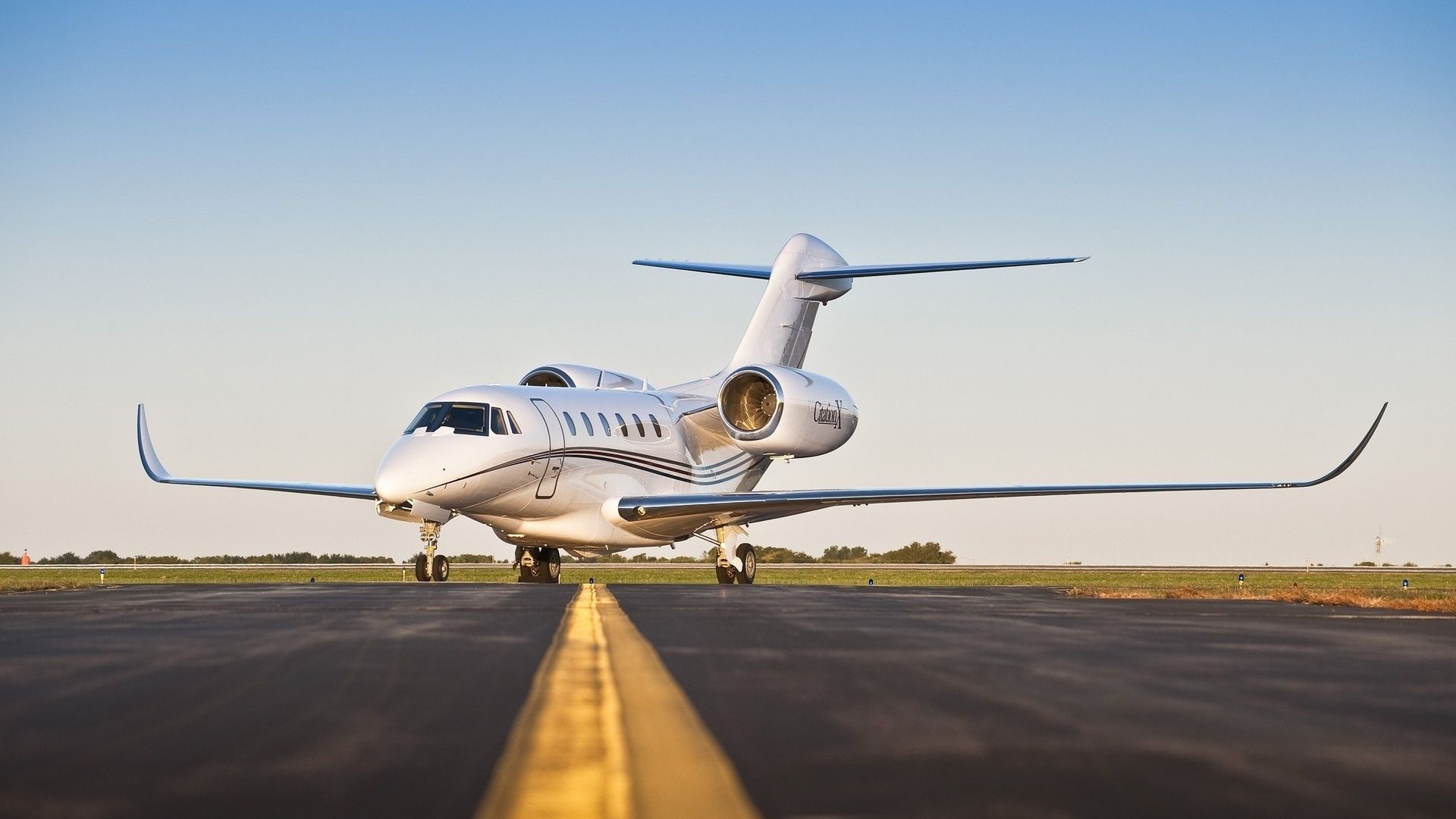
Citation X
Challenger 300, Citation X, Gulfstream G200, Citation Longitude, Citation Sovereign, Falcon 2000
FROM $6,000/ Per Hour
Seats
8
Range
3000 mi
Speed
525 mph
Heavy Jets
Gulfstream GV
Global 5000, Gulfstream G500, Legacy 650, Gulfstream 450, Challenger 850, Falcon 900EX
FROM $10,000/ Per Hour
General Cost Breakdown
Billable Flight Time
Billable flight time refers to the duration for which clients are charged for the use of an aircraft. It starts from the moment the aircraft begins to move for takeoff and concludes when it comes to a stop after landing. While there’s a standard practice in the aviation industry to charge a minimum of 2 hours per day for aircraft rental and charter services, this is particularly prevalent in Jet Card programs. In the on-demand charter world, operators often rely on system-generated flight times for billing. They provide some flexibility, typically not charging extra if the actual flight time slightly exceeds the estimate, and similarly, not reducing charges for marginally shorter flights.
Fuel Surcharge
A fuel surcharge becomes applicable when there’s a notable rise in aviation fuel prices. This additional cost, reflecting current market fluctuations, can vary between $200 to $2,250 per hour, sometimes even higher, depending on the size and type of the aircraft. At Jetlevel Aviation, we prioritize transparency and client convenience. Therefore, we include any potential fuel surcharges directly in our initial quotes.
Crew Fees
Crew fees go beyond basic salaries, reflecting the expertise and experience necessary for safe, efficient flight operations. These fees, generally ranging from $600 for domestic locations to $2,000 for larger crews and international destinations, basically vary according to the flight’s duration, route intricacy, and specific demands of each journey. Notably, longer or more complex routes may involve higher fees due to the increased workload and expertise required from the crew.
Federal Excise Tax (FET)
Federal Excise Tax (FET) is an essential component of the costs associated with private jet charters in the United States. Levied by the federal government, FET is 7.5% of the air transportation charges. This tax is not only applicable to domestic journeys but also extends to segments of international flights traversing U.S. airspace. A key aspect to remember is the additional segment fee, charged per leg of the flight, which varies depending on the route and aircraft type.At JetLevel Aviation, this tax is accounted for in the overall cost of the private jet charter, ensuring our clients receive a transparent and all-inclusive quote that reflects the total expense, including FET, without any hidden fees.
Segment Fees
Segment fees are a government tax charge for passengers, typically applied per leg in the itinerary. In the U.S. The 2026 rate is $5.30 per passenger per segment. They’re used to fund Federal Aviation Administration (FAA) costs, and it’s an addition to the 7.5% Federal Excise Tax (FET).
| Charge | 2026 rate | Applies to |
|---|---|---|
| Federal excise tax | 7.5% | All US domestic flight segments |
| Domestic segment fee | $5.30 | Per passenger, per leg |
| International head tax | $23.40 | Per passenger, replaces the excise tax on international segments |
| CBP user fee | $7.39 | Per passenger, international arrivals |
| CBP aircraft decal | $27.50 | Per year, private aircraft entering the US |
Additional Concierge Services
Additional concierge services in private jet charter, like bespoke travel arrangements or special requests, add a personalized touch but also impact the overall cost. These services can include anything from booking luxury ground transportation, securing reservations at exclusive restaurants, to arranging event tickets or special on-board amenities. The cost varies greatly depending on the nature and complexity of the services, potentially ranging from a few hundred to several thousand dollars.
Factors Affecting Charter Costs
Flight Time & Distance
Distance moves the price more than anything else. On a light jet, the median one-way price in our data is $12,866 under 500 nautical miles and $22,903 from 1,000 to 1,800 nautical miles. Beyond a light jet's range a larger aircraft is needed, and a heavy jet trip over 3,000 nautical miles has a median of $115,009. Price does not rise in proportion to distance, because fixed costs such as positioning and airport fees are spread across more flying time on longer trips.
Charter Destination
The destination of your private jet charter significantly influences the cost. Popular destinations might offer more competitive pricing due to higher demand and availability of aircraft. For example, a charter flight to a major city like Las Vegas or New York could be more cost-effective compared to remote or less frequented locations. International destinations generally increase the cost, with factors like international fees and longer flight durations playing a role.
A private jet charter from the USA to Europe, for instance, A heavy jet like Falcon 900EX from Orlando(KMCO) to Barcelona(KBCN) can cost about $120,000 or more.
Aircraft Type
The type of aircraft is the second biggest driver of price. All in, the median hourly rate in our data runs from $5,577 for a turboprop to $15,749 for an ultra long range jet. Larger aircraft carry more passengers further without a fuel stop, and burn more fuel and need larger crews to do it. The right aircraft is the smallest one that can fly your group the full distance nonstop.
Age of Aircraft
The age of the aircraft is a crucial factor in determining private jet charter costs. Newer jets, often featuring the latest in technology and luxury amenities, command higher prices, potentially adding thousands to the hourly rate. For example, the latest model, a brand new heavy jet like Gulfstream 700, might cost around $18,000 per hour. In contrast, older models, while still safe and comfortable like Gulfstream G-IV, can be more budget-friendly, with hourly rates possibly around $14,000.
Peak Demand Scheduling
During peak demand periods, the cost of chartering a private jet typically increases due to higher demand and limited availability of aircraft. These periods often include holidays, major events, or business seasons. For instance, chartering a jet during Christmas or the Super Bowl can be significantly more expensive, sometimes by 20% to 50%, compared to off-peak times.
Expert Tip from Ricky Gomulka, Founder and Managing Partner
While we pride ourselves on accommodating last-minute bookings, I always advise our clients to plan ahead, especially during peak demand seasons. Booking early not only secures better rates but also ensures a wider choice of aircraft. Remember, the closer you get to major holidays or events like Christmas or the Super Bowl, the steeper the prices can climb – sometimes up to 50% more. Early planning is key to enjoying the luxury of private jet travel without unnecessary surcharges.
Additional Costs and Fees
In-flight Phone Usage
($5 to $11 per minute)In-flight phone use on private jets can be costly, often ranging from $5 to $8 per minute domestically, while for international flights it can cost between $8 to $11 per minute. Charges are based on usage, so longer calls or data use can significantly increase costs. It’s wise to check rates and consider alternatives like Wi-Fi for calls to manage expenses.
De-icing
($1,500 to $10,000)De-icing is a crucial safety measure for private jet charters in cold weather. The process involves removing ice and snow from the aircraft with a de-icing fluid, ensuring safe operation. The cost of de-icing varies depending on the size of the jet and the amount of ice build-up, ranging from $1,500 to $10,000 or more. For smaller jets like light jets it can cost around $1,500 while larger jets like airliners can cost more then $10,000 since they require more de-icing fluid.
Airport Landing Fees
($100 to $1,500 per flight)Airport landing fees are a standard charge for private jet charters,ranging from $100 to $1,500 per flight and varying based on the airport’s size and location. Smaller airports might charge a few hundred dollars, while major international hubs can charge several thousand. These fees cover the use of airport facilities and services. It’s important to factor these into the overall cost of your charter, as they can add a significant amount to the total, especially for multi-leg trips as they involve multiple landing.
Hangar Rentals
($500 to $1,500 per day)This is like renting a garage for your car but for jets. It’s the cost for storing the aircraft in a hangar, particularly important for protecting the jet from harsh weather. If your jet stays overnight or for several days at an airport, it might be kept in a hangar, leading to rental charges. These fees depend on the airport and the size of the aircraft. It’s wise to consider these as extra parking costs when planning your jet charter, especially for longer stays as they are calculated per day.
Ramp and Handling Fees
($100 to $500 per visit)These are more like the valet services for your jet. They cover the costs of services provided on the ground, such as parking the jet on the airport ramp (which is basically the jet parking lot), servicing the aircraft, and any ground support needed while the aircraft is at the airport. These fees can vary based on the airport’s size and the level of service they provide, and are charged by the fixed-base operator (FBO).
Overnight Accommodation
($150 to $300 per crew member)Overnight accommodation costs for the crew can impact the overall price of a private jet charter. If your trip requires the crew to stay overnight or for multiple nights, you’ll need to cover their hotel and possibly meal expenses. These costs can vary greatly depending on the location and duration of the stay. For example, a night’s stay in a standard hotel might add approximately $150 to $300 per crew member, while upscale locations could be higher.
Short Leg Fees (Applied on under 1-2 hour flight time)
Short leg fees are added costs on private jet charters for exceptionally brief flights, often applied when a trip is below a certain mileage or time threshold, like under 1 hour or 2 hours of flight time. These fees compensate for the operational costs not covered by the minimum billing. For example, a jet might have a 2-hour minimum charge, so a 1-hour flight could still incur the cost of 2 hours.
Aircraft Positioning Fees
A charter client will pay aircraft positioning fees in scenarios where the chosen jet isn’t located at the departure airport. For example, if you’re flying out of Los Angeles but the jet is based in San Francisco, the jet needs to be flown, or ‘positioned,’ to Los Angeles for your trip. This positioning involves additional flight time, fuel, crew, and maintenance costs, all of which contribute to the fee. Essentially, it’s like a delivery charge for bringing the jet to your starting point. Aircraft positioning fees typically cost less than the standard charter rate that a broker quotes for the actual flight. These fees are meant to cover the operational costs of moving the aircraft to your departure point.
Cleaning Fees
($150 to $350 per charter)Cleaning fees for private jet charters cover the cost of cleaning and sanitizing the aircraft before and after each flight. These fees have become particularly significant in maintaining high hygiene standards after COVID-19. Depending on the size of the jet and the level of service, cleaning fees can range from $150 to $350 per charter.
Aircraft Daily Minimums
Aircraft daily minimums in private jet charter typically refer to a required minimum number of billable flight hours per day when booking a charter. Most aircraft have a 2-hour daily minimum. For instance, if you book a 3-day round-trip, the cost might reflect 6 hours of billable flight time (3 days x 2 hours) even if the actual flight time is less. This daily minimum ensures revenue for aircraft owners for the days the aircraft is reserved, even if the actual flying time is shorter.
| Aircraft Type | Daily Minimum Hours |
|---|---|
| Turboprop | 1.5 hours |
| Midsize Jets | 2 hours |
| Large Jets | 2.5 hours |
Cost of Medical Evacuation Services
($10,000 to $100,000+)The cost of medical evacuation services via private jet can be substantial, reflecting the specialized nature of these flights. Prices typically start around $10,000 and can exceed $100,000, depending on factors like the distance of the flight, the type of aircraft required, and the level of medical care needed. For instance, a medevac flight within the United States may be on the lower end of the scale, while international medical repatriation can be much more expensive due to longer distances and additional logistical complexities.
Refueling
Refueling costs are a key component of private jet charter expenses. The cost depends on the aircraft’s fuel consumption rate and the current price of jet fuel. For instance, refueling a light jet might cost between $2,000 to $3,000, while larger jets could incur $5,000 to $10,000 or more per refueling. These costs vary with fuel price fluctuations and the specific fuel needs of the aircraft. It’s important to note that longer flights requiring multiple refueling stops can substantially increase the total charter cost.
| Aircraft Type | Fuel Consumption Rate | Flat Amount Per Hour |
|---|---|---|
| Light Jet | Moderate | $625 per hour |
| Midsize Jets | Higher than Light Jet | $800 per hour |
| Super-Midsize Jet | Higher than Midsize Jet | $850 per hour |
| Heavy Jet | High | $925 per hour |
Unscheduled Itinerary Changes
Making changes to your flight plan, especially last minute, can incur additional fees. For instance, altering the destination might result in rerouting fees, additional fuel costs, and possibly crew accommodation expenses, potentially adding thousands to your bill. Similarly, changing departure times could lead to crew overtime charges or overnight fees for the aircraft.
International Charges
($1,000 to $10,000)International charges can include international handling fees, customs and immigration services, and potentially higher landing and parking fees at international airports. For example, a transatlantic flight might incur additional costs ranging from $1,000 to $10,000 or more, depending on the destination, length of stay, and airport fees. Overflight permits and navigation charges also contribute to these costs.
Comparative Cost Analysis
How Much Do Private Jets of Different Sizes Cost?
Aircraft for private jet charter are differentiated by size, each suited to specific travel needs based on range, passenger capacity, and luggage space. Typically, the larger the jet, the longer the range it can cover and the more passengers and baggage it can accommodate. Correspondingly, the hourly rental rates increase with the size of the aircraft.
The cost of chartering a private jet is influenced by multiple factors including the jet’s size, model, and age. It’s essential to select an aircraft not just by its size, but also by its ability to reach your destination efficiently. For example, opting for a smaller jet might seem cost-effective due to lower hourly rates, but if it requires additional fuel stops, this could extend your travel time and add unforeseen expenses. In some cases, a larger aircraft, despite a higher hourly rate, could offer better overall value by eliminating the need for refueling stops and reducing total travel time. This balance between size, range, and cost is a key consideration when planning your private jet charter.
Turboprops
Turboprops are an efficient choice for shorter journeys, featuring turbine propeller engines that offer a unique blend of performance and convenience. Typically seating between 5 to 11 passengers, these aircraft boast an average cabin height of about 4.8 feet, ensuring a comfortable travel experience. With their capability to cover ranges of 3 to 6 hours, turboprops are ideal for trips under 1,000 miles, especially advantageous for accessing airports with shorter runways.
| Name | Passenger Capacity | Range | Speed | Base Hourly Rate | Max Airtime |
|---|---|---|---|---|---|
| King Air 250 | 6-8 passengers | 1,720 nm or 1,980 miles | 310 kts or 357 mph | $2,300 - $2,900 | ~5.55 hours |
| King Air 350 | 9-11 passengers | 1,550 nm or 1,784 miles | 310 kts or 357 mph | $4,300 - $5,600 | ~5.00 hours |
| Pilatus PC12 | 6-8 passengers | 1,803 nm or 2,075 miles | 268 kts or 308 mph | $2,300 - $2,900 | ~6.73 hours |
| Cessna Caravan | 7-9 passengers | 1,070 nm or 1,231 miles | 186 kts or 214 mph | $1,900 - $3,900 | ~5.75 hours |
| TBM Socata 850 | 5-6 passengers | 1191 nm or 1,370 miles | 317 kts or 364 mph | $1,700 - $3,700 | ~3.76 hours |
The hourly rates in the table above are base rates for the aircraft alone. All in, the median rate for a turboprop in our data is $5,577 per block hour, and on the trip length we price most often for this class, under 500 nm, the median one-way price is $9,362 (typical range $7,409–$11,303). See the trip pricing tables above for every distance band.
Very Light Jet
Very Light Jets (VLJs) represent a revolution in air travel, offering an economical yet comfortable option for short-haul flights. These jets typically seat 4 to 7 passengers and are powered by modern, efficient engines. Renowned for their cost-effectiveness and lower operational costs, VLJs are an ideal solution for small groups and individuals traveling on shorter routes, up to about 1,500 miles. They provide a cozy cabin space, perfect for quick business trips or weekend getaways, without the larger footprint of traditional private jets.
| Name | Passenger Capacity | Range | Speed | Base Hourly Rate | Max Airtime |
|---|---|---|---|---|---|
| Citation M2 | 5-7 passengers | 1,550 nm or 1,784 miles | 404 kts or 465 mph | $4,900 - $6,900 | 3.84 hours |
| Honda Jet | 5-6 passengers | 1,223 nm or 1,407 miles | 422 kts or 485 mph | $4,900 - $6,900 | 2.90 hours |
| Phenom 100 | 4-6 passengers | 1,519 nm or 1,748 miles | 389 kts or 448 mph | $4,400 - $6,400 | 3.90 hours |
| Vision Jet | 6-7 passengers | 1,275 nm or 1,467 miles | 305 kts or 351 mph | $4,200 - $6,200 | 4.18 hours |
| Eclipse 550 | 4-6 passengers | 1,125 nm or 1,295 miles | 375 kts or 430 mph | $4,200 - $6,200 | 3.00 hours |
The hourly rates in the table above are base rates for the aircraft alone. All in, the median rate for a very light jet in our data is $6,175 per block hour, and on the trip length we price most often for this class, under 500 nm, the median one-way price is $8,917 (typical range $7,290–$10,669). See the trip pricing tables above for every distance band.
Light Jet
Light jets, distinguishable by their sleek design and advanced jet engines, cater superbly to small groups seeking speed and efficiency. Typically seating 6 to 9 passengers, these jets offer a compact yet luxurious cabin environment, ideal for short to medium-range flights. With an impressive cruising speed of around ~450 mph and a range of 1,700 to 2,300 nautical miles, light jets are perfect for quick city hops or efficient business trips. They provide a harmonious blend of comfort, speed, and functionality, making them a preferred choice for travelers looking for a step above turboprops in both performance and luxury.
| Name | Passenger Capacity | Range | Speed | Base Hourly Rate | Max Airtime |
|---|---|---|---|---|---|
| Citation Encore+ | 7-9 passengers | 1,712 nm or 1,800 miles | 430 kts or 495 mph | $5,900 - $7,900 | ~4.00 hours |
| Citation CJ3 | 6-8 passengers | 2,000 nm or 2,000 miles | 480 kts or 552 mph | $5,900 - $7,900 | ~4.20 hours |
| Phenom 300 | 6-7 passengers | 1,971 nm or 2,000 miles | 430 kts or 495 mph | $6,250 - $7,450 | ~4.60 hours |
| Nextant 400XTI | 6-8 passengers | 1,801 nm or 2,003 miles | 447 kts or 514 mph | $5,400 - $7,400 | ~4.00 hours |
| Lear 45XR | 8-9 passengers | 2,301 nm or 2,100 miles | 400 kts or 460 mph | $6,400 - $8,400 | ~5.75 hours |
The hourly rates in the table above are base rates for the aircraft alone. All in, the median rate for a light jet in our data is $7,714 per block hour, and on the trip length we price most often for this class, 500 to 1,000 nm, the median one-way price is $18,908 (typical range $16,253–$21,403). See the trip pricing tables above for every distance band.
Midsize Jet
Midsize jets stand out as the versatile choice for longer domestic or short international flights, offering a comfortable balance between range and luxury. Typically accommodating 7 to 9 passengers, these jets provide more cabin space, enabling passengers to stand up and move around with ease. With an average range of about 2,100 to 3,200 nautical miles and a cruising speed of around ~500 mph, midsize jets are ideal for travelers seeking enhanced comfort without venturing into the larger, more costly jet categories. They often feature amenities like WiFi, enhanced soundproofing, and superior in-flight entertainment systems, making them suitable for both business and leisure travel.
| Name | Passenger Capacity | Range | Speed | Base Hourly Rate | Max Airtime |
|---|---|---|---|---|---|
| Hawker 800XP | 8-9 passengers | 3,100 nm or 3,567 miles | 419 kts or 482 mph | $6,800 to $8,800 | ~7.40 hours |
| Hawker 900XP | 6-8 passengers | 3,242 nm or 3,730 miles | 419 kts or 482 mph | $6,900 and $8,900 | ~7.74 hours |
| Citation XLS | 7-9 passengers | 2,100 nm or 2,416 miles | 441 kts or 507 mph | $6,800 and $8,800 | ~4.76 hours |
| Lear 60 | 6-7 passengers | 2,405 nm or 2767 miles | 425 kts or 489 mph | $6,400 and $8,400 | ~5.66 hours |
| Lear 75 | 6-8 passengers | 2,040 nm or 2347 miles | 465 kts or 535 mph | $7,400 and $9,400 | ~4.39 hours |
The hourly rates in the table above are base rates for the aircraft alone. All in, the median rate for a midsize jet in our data is $8,364 per block hour, and on the trip length we price most often for this class, 500 to 1,000 nm, the median one-way price is $21,429 (typical range $18,720–$24,515). See the trip pricing tables above for every distance band.
Super-Midsize Jet
Super-midsize jets elevate the private flying experience, blending the spaciousness of a large jet with the efficiency of a midsize model. Seating typically ranges from 8 to 10 passengers, with cabins spacious enough for standing and moving about comfortably. These jets are ideal for longer-range flights, boasting ranges of approximately 2,800 to 3,400 nautical miles and cruising speeds close to 525 mph. Super-midsize jets often feature enhanced amenities such as full stand-up cabins, more luxurious seating, advanced entertainment systems, and full-service galleys, catering to both business and leisure travelers seeking a higher level of comfort and luxury.
| Name | Passenger Capacity | Range | Speed | Base Hourly Rate | Max Airtime |
|---|---|---|---|---|---|
| Citation X | 8-9 passengers | 3,125 nm or 3,596 miles | 525 kts or 604 mph | $8,900 - $10,900 | ~5.95 hours |
| Citation Sovereign | 8-9 passengers | 2,847 nm or 3,276 miles | 430 kts or 495 mph | $8,900 - $10,900 | ~6.62 hours |
| Falcon 50EX | 9-10 passengers | 3,230 nm or 3,717 miles | 417 kts or 480 mph | $7,900 - $9,900 | ~7.75 hours |
| Challenger 300 | 8-9 passengers | 3,100 nm or 3,567 miles | 470 kts or 540 mph | $10,900 - $12,900 | ~6.60 hours |
| Gulfstream G200 | 8-10 passengers | 3,400 nm or 3,912 miles | 494 kts or 568 mph | $10,500 to $12,500 | ~6.88 hours |
The hourly rates in the table above are base rates for the aircraft alone. All in, the median rate for a super midsize jet in our data is $10,055 per block hour, and on the trip length we price most often for this class, 1,000 to 1,800 nm, the median one-way price is $38,731 (typical range $33,325–$44,945). See the trip pricing tables above for every distance band.
Heavy Jet
Heavy jets are the epitome of luxury and range in private aviation, designed for long-haul travel and larger groups. These aircraft typically accommodate 8 to 16 passengers, offering ample cabin space that includes areas for dining, relaxation, and even sleeping quarters in some models. With a range of about 3,000 to 6,000 nautical miles and cruising speeds of around ~525 mph, heavy jets are perfect for transcontinental and international journeys, providing unmatched comfort and amenities like high-speed WiFi, gourmet catering facilities, and entertainment systems.
| Name | Passenger Capacity | Range | Speed | Base Hourly Rate | Max Airtime |
|---|---|---|---|---|---|
| Gulfstream GIVSP | 13-16 passengers | 4,166 nm or 4,781 miles | 435 kts or 500 mph | $9,000 - $12,000 | ~9.58 hours |
| Gulfstream GV | 12-16 passengers | 6,750 nm or 7,767 miles | 435 kts or 500 mph | $12,000 - $16,000 | ~15.52 hours |
| Falcon 2000 | 8-12 passengers | 3,130 nm or 3,601 miles | 487 kts or 560 mph | $8,000 - $11,000 | ~6.43 hours |
| Falcon 900 | 12 passengers | 3,970 nm or 4,569 miles | 378 kts or 512 mph | $11,000 - $14,000 | ~10.50 hours |
| Challenger 605 | 10-12 passengers | 4,123 nm or 4,745 miles | 447 kts or 514 mph | $8,000 - $11,000 | ~9.22 hours |
The hourly rates in the table above are base rates for the aircraft alone. All in, the median rate for a heavy jet in our data is $12,644 per block hour, and on the trip length we price most often for this class, 500 to 1,000 nm, the median one-way price is $34,425 (typical range $27,960–$41,594). See the trip pricing tables above for every distance band.
Regional Private Jet Cost Comparison
USA, UK & Europe, Canada, South America, Asia
Comparing the cost of chartering the same type of private jet across different regions highlights how geographic location can significantly influence pricing. For this comparison, let’s use a midsize jet, a popular choice for its balance of comfort, range, and cost, and examine how its rental rates vary across various global regions.
North America: Chartering a midsize jet like the Hawker 800XP from New York to Miami might cost around $20,400 for a 3-hour flight, based on an average hourly rate of $6,800. North America, with its well-developed aviation infrastructure, offers competitive pricing due to the high availability of aircraft.
Europe: The same midsize jet, for instance, a Citation XLS, flying from London to Rome, a journey of approximately 4 hours, could cost about $28,000, with an average hourly rate of €7,000. Europe’s dense airspace and varying operational costs across countries can make charter prices slightly higher.
Asia: In Asia, chartering a similar jet, like a Bombardier Challenger 350, for a flight from Dubai to Singapore (approximately 7 hours), could cost upwards of $70,000, with hourly rates around $10,000. Higher operational costs and less availability of private jets in certain areas of Asia often result in higher charter rates.
Middle East: A flight from Dubai to Beirut in a midsize jet, say a Gulfstream G200, lasting around 3 hours, might cost around $30,000, at an average hourly rate of $10,000. The Middle East’s strategic location and the luxurious preferences of travelers can influence the higher pricing.
Australia: Flying from Sydney to Perth in a midsize jet like a Learjet 60, which takes around 5 hours, could cost approximately $35,000, considering an hourly rate of $7,000. The vast distances and lower density of airports can affect charter prices in this region.
This comparison illustrates how the same type of aircraft can vary in cost depending on the region, influenced by factors like availability, demand, operational costs, and regional economic conditions.
| Region | Aircraft Type | Route | Flight Time | Base Hourly Rate | Total Cost |
|---|---|---|---|---|---|
| North America | Hawker 800XP | New York to Miami | 3 hours | $7,000 | $21,000 |
| Europe | Citation XLS | London to Rome | 4 hours | €7,000 | €28,000 |
| Asia | Challenger 350 | Dubai to Singapore | 7 hours | $10,000 | $70,000 |
| Middle East | Gulfstream G200 | Dubai to Beirut | 3 hours | $10,000 | $30,000 |
| Australia | Learjet 60 | Sydney to Perth | 5 hours | $7,000 | $35,000 |
Price Comparison with First-Class Commercial Flights
Comparing the cost of private jet charter with first-class commercial flights reveals distinct differences. While first-class seats on commercial flights are more affordable, private jet charter offer unparalleled privacy, convenience, and flexibility. For example, a first-class commercial ticket might cost between $5,000 to $10,000 for a transcontinental flight in the U.S., whereas a private jet charter for the same route could range from $20,000 to $35,000, depending on the aircraft type and amenities.
Membership or Subscription Models
Membership or subscription models in private jet chartering are innovative programs where clients pay a regular fee for access to a fleet of jets, often at preferential rates. These models can provide cost savings and added convenience for frequent flyers, offering a range of benefits like guaranteed availability, fixed hourly rates, and reduced overall travel costs. Currently, JetLevel Aviation is excited to explore the potential of introducing such a membership or subscription model. While we don’t offer this service yet, we’re working towards providing this option to our clients soon, enhancing the flexibility and benefits of flying with JetLevel Aviation. Stay tuned for updates on this forthcoming feature!
Additional Considerations in Charter Pricing
Customization Costs
Customization costs in private jet charters can vary widely, depending on the extent and nature of the customization requested. These could include specific catering requests, onboard amenities, or particular cabin configurations. Simple requests, like preferred meals or specific beverages, may have minimal additional costs, possibly ranging from a few hundred to a couple of thousand dollars. More elaborate customizations, such as specialized interior fittings or high-tech equipment installations, can significantly increase the cost.
Availability and Cost of Wi-Fi/High-Speed Internet
Wi-Fi on private jets typically costs between $4 to $8 per megabyte, depending on the provider and data usage. Some aircraft include Wi-Fi in the charter fee, while others charge separately. Wi-Fi is standard in most newer models.
Accessibility Features for Passengers with Disabilities
Chartering a private jet with accessibility features for passengers with disabilities may incur additional costs, depending on the specific modifications and services required. These modifications can include wheelchair lifts, specialized seating, and customized cabin arrangements. While standard private jet charters already offer spacious and comfortable settings, tailor-made accommodations for accessibility needs can increase the overall cost.
Environmental Impact Fees
Environmental impact fees are charges associated with the environmental footprint of a private jet charter. These fees contribute to offsetting carbon emissions and supporting sustainability initiatives. The exact amount can vary based on the flight’s duration, aircraft type, and fuel consumption. For instance, a shorter domestic flight might incur a lower fee compared to a longer international journey. At JetLevel Aviation, while we strongly support environmental sustainability, the decision to contribute to environmental impact fees is left to the discretion of our clients.
Cancellation and Rescheduling Policies
Cancellation and rescheduling policies for private jet charters can vary, but generally, these policies are designed to offer some flexibility while protecting the interests of the charter company. At JetLevel Aviation, cancellations made well in advance typically incur minimal or no fees. However, fees may increase as the flight date approaches, with significant charges or full payment required for last-minute cancellations. Rescheduling is usually accommodated based on aircraft availability and may incur additional costs depending on the timing and nature of the change. Our goal is to be as accommodating as possible while ensuring operational feasibility and fairness for all parties involved.
Seasonal Variations in Pricing
Seasonal variations in private jet charter pricing can significantly impact costs. During peak seasons, such as summer or major holidays, prices can increase by approximately 20% to 30% compared to off-peak periods. For example, chartering a midsize jet that usually costs around $6,400 per hour might rise to about $7,600 to $8,300 per hour during peak times. Conversely, during quieter seasons like late fall or early spring, you might find prices slightly lower than the average
Scenario-Based Cost Analysis
Four trips we price regularly, each priced from our own trip data rather than built up from an hourly rate. Each shows the median price for its distance and aircraft class, the typical range around it, and the taxes that sit inside the price.
Private Flight Scenario 1: Business Day Trip
| Scenario 1 | |
|---|---|
| Trip type | Domestic business, same-day round trip |
| Passengers | 4 |
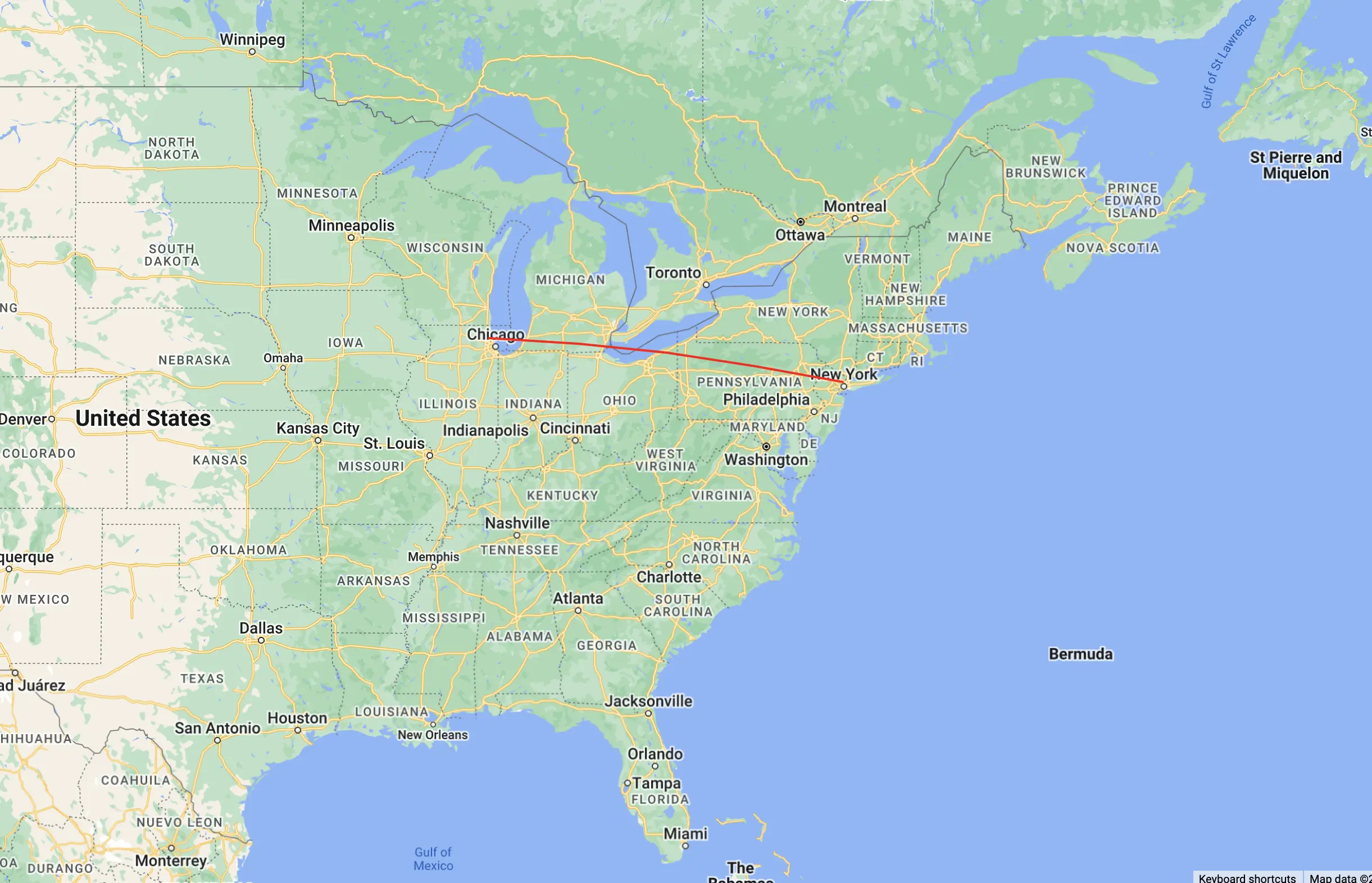
| Route | Teterboro (KTEB) to Chicago Executive (KPWK) and back |
| Distance | 626 nm each way |
| Aircraft class | Light jet |
| Median round-trip price | $32,801 |
| Typical range | $26,917–$36,936 |
| Sample size | 125 |
| Taxes inside the price | 7.5% federal excise tax; segment fees $42.40 (4 passengers, 2 legs) |
At 626 nautical miles each way this trip sits in the 500 to 1,000 nm band, where a light jet round trip has a median price of $32,801 in our data. A Phenom 300 or Citation CJ4 covers it in under two hours each way with four passengers and bags.
Because the aircraft and crew wait in Chicago and fly home the same day, there is no crew overnight and no empty repositioning leg, which is why a same-day round trip costs far less than two one-way trips.
Private Flight Scenario 2: Family Vacation
| Scenario 2 | |
|---|---|
| Trip type | International leisure, one week |
| Passengers | 6 |
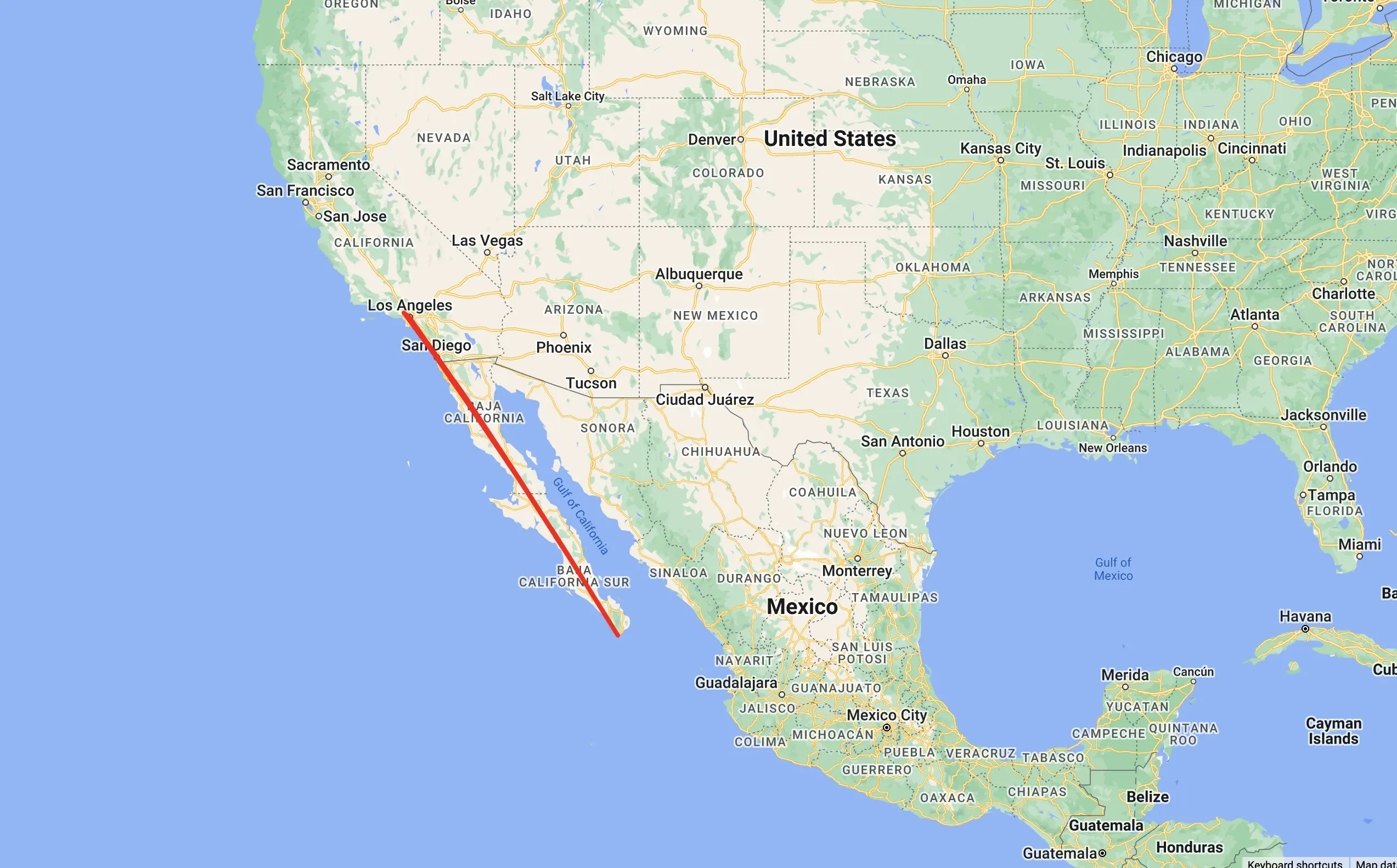
| Route | Van Nuys (KVNY) to Los Cabos (MMSD) and back |
| Distance | 808 nm each way |
| Aircraft class | Midsize jet |
| Median round-trip price | $41,670 |
| Typical range | $34,995–$46,783 |
| Sample size | 82 |
| Taxes inside the price | International head tax $280.80 (6 passengers, 2 segments); CBP user fee $44.34 on return; Mexican airport and immigration charges |
Van Nuys to Los Cabos is 808 nautical miles, inside the 500 to 1,000 nm band, where a midsize jet round trip has a median price of $41,670 in our data.
Because the trip crosses a border, the 7.5% excise tax does not apply; the international head tax and US customs fees replace it. On a week-long stay the operator will usually fly the aircraft home and back again rather than keep crew in Cabo for seven nights, and the quote will show whichever is cheaper.
Private Flight Scenario 3: International Business Conference
| Scenario 3 | |
|---|---|
| Trip type | Long-haul international business, 3 days |
| Passengers | 10 |
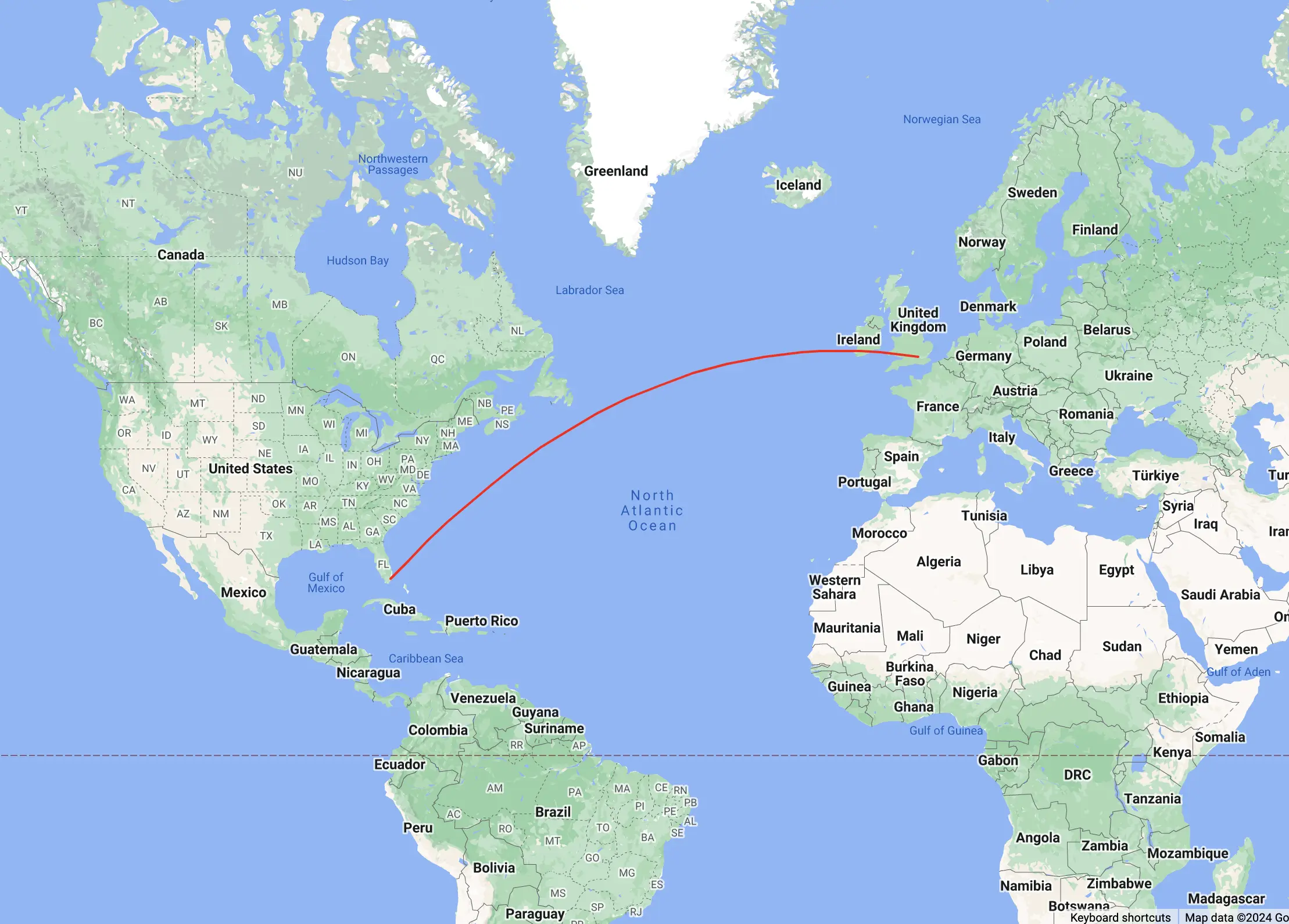
| Route | Miami Opa-locka (KOPF) to Farnborough (EGLF) and back |
| Distance | 3,823 nm each way |
| Aircraft class | Ultra long range jet |
| Median one-way price | $153,985 |
| Typical range, one way | $126,791–$215,000 |
| Sample size | 59 |
| Two one-way legs at the median | $307,970 |
| Taxes inside the price | International head tax $468.00 (10 passengers, 2 segments); CBP user fee $73.90 on return; UK Air Passenger Duty on the London departure |
At 3,823 nautical miles, with ten passengers and a westbound headwind on the way home, this is an ultra long range trip: a Global 6000 or Gulfstream G650 flies it nonstop. Our data prices this distance one way, at a median of $153,985.
Two one-way legs at the median come to $307,970. With the aircraft waiting in London for three days, the round trip is usually quoted below that, because neither leg carries an empty return. Farnborough is the business aviation airport most London trips use; Heathrow has very limited slots for private aircraft.
Private Flight Scenario 4: Multi-City Business Tour
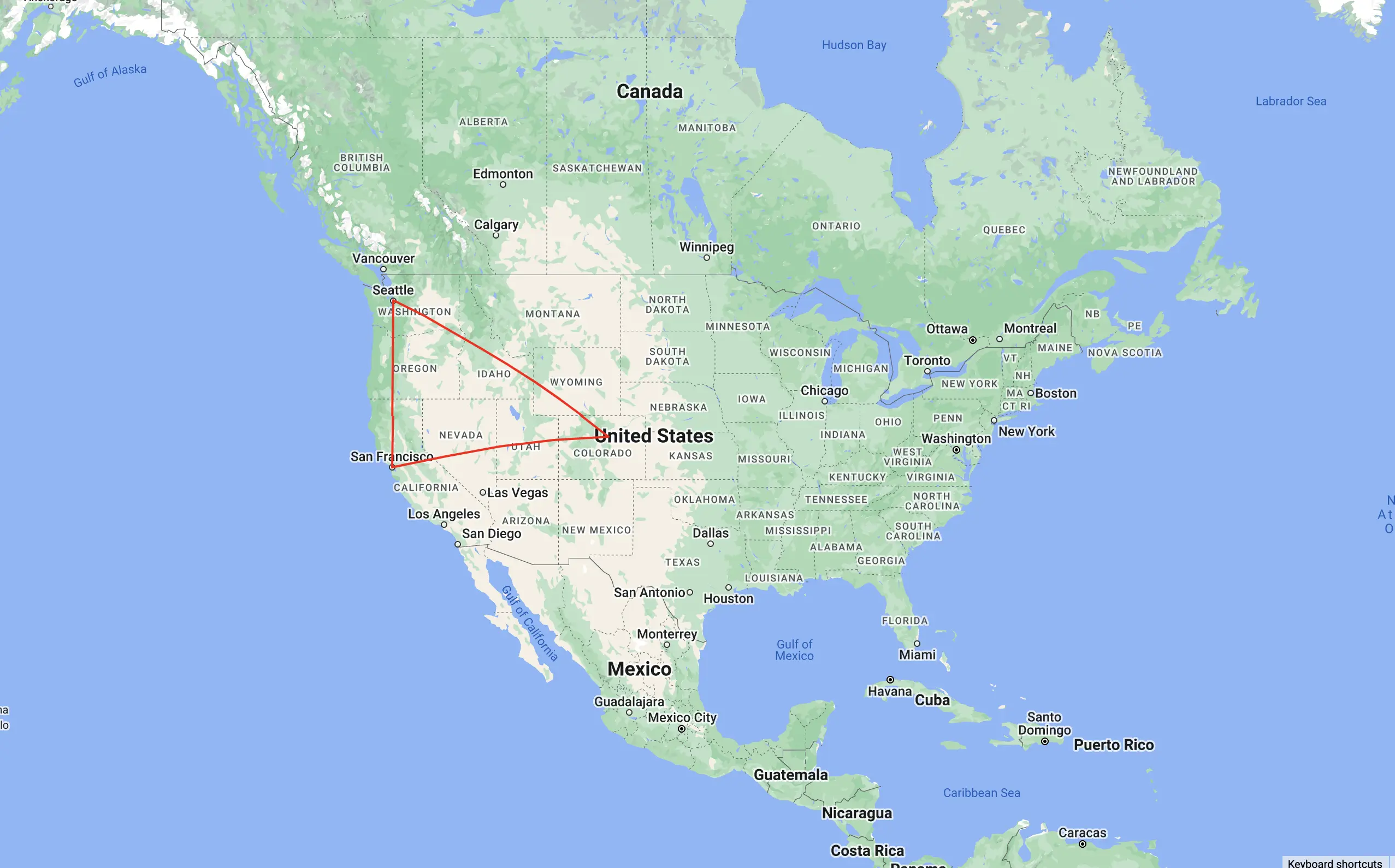
| Scenario 4 | |
|---|---|
| Trip type | Multi-leg domestic business, 3 days |
| Passengers | 8 |
| Route | San Francisco (KSFO) to Boeing Field (KBFI) to Centennial (KAPA) to San Francisco (KSFO) |
| Distance | 595 nm, 894 nm and 829 nm |
| Aircraft class | Super midsize jet |
| Median one-way price, 500 to 1,000 nm | $26,915 |
| Three legs at the one-way median | $80,745 |
| Sample size | 74 |
| Taxes inside the price | 7.5% federal excise tax; segment fees $127.20 (8 passengers, 3 legs) |
All three legs fall in the 500 to 1,000 nm band, where a super midsize jet one way has a median price of $26,915 in our data. Priced as three separate one-way trips, the tour would come to $80,745.
Flown as one itinerary on one aircraft, it is usually quoted below that. The aircraft finishes where it started and never repositions empty between cities, so the cost of those empty legs, which is built into every one-way price, drops out. Two crew overnights are added instead.
Smart Travel Tools
Navigate your private jet charter experience with precision and ease using our suite of intuitive tools. From real-time flight tracking to instant cost and distance estimations, we empower you to make informed, confident decisions about your travel. Discover a smarter way to fly, tailored to your needs.
Frequently Asked Questions
What are the average hourly rates for different types of private jets?
All in, the median hourly rate in our data is turboprop $5,577, very light jet $6,175, light jet $7,714, midsize jet $8,364, super midsize jet $10,055, heavy jet $12,644, ultra long range jet $15,749 per block hour. These are total trip prices divided by flight time, so they include positioning, crew expenses, airport and handling fees and taxes. Published base or wet rates are lower because they measure the aircraft alone, which is why the trip total is the better figure to compare.
What is the cheapest private jet to charter?
On a trip under 500 nautical miles, the lowest median one-way prices in our data are $8,917 for a very light jet and $9,362 for a turboprop. Turboprops and very light jets are the least expensive aircraft to charter on short trips, typically seating four to eight passengers. On longer trips the cheapest option is the smallest aircraft that can fly the distance without a fuel stop, and empty leg flights can be cheaper again when your dates are flexible.
How do international private jet charter compare in cost to domestic ones?
Private jet charter cost for international flights is generally higher than domestic due to longer flight durations, increased fuel consumption, international handling fees, and potentially higher crew costs.
What additional costs should be considered for international private jet flights?
For international private jet flights, additional costs to consider include:
Customs and Immigration Fees: Handling international entry and exit procedures can incur fees.
International Handling and Permits: Costs for obtaining necessary overflight and landing permits, as well as handling services at foreign airports.
Increased Fuel Costs: Longer flights require more fuel, which can significantly increase costs, especially if refueling in countries with high fuel prices.
Crew Expenses: Accommodation and daily allowances for the crew during stops or layovers.
Catering and In-Flight Services: Enhanced catering options to meet the duration and standards expected on longer flights.
Taxes: Different countries may impose various taxes, such as value-added tax (VAT) or luxury taxes on flights.
Insurance Premiums: May be higher for international travel due to extended coverage requirements.
These factors collectively contribute to a higher overall cost for international private jet charters compared to domestic flights.
Does the number of passengers alter the cost of chartering a private jet?
Not directly: a charter is priced per aircraft, not per seat, so the total is the same whether two passengers fly or eight. Passenger count matters in two ways. It sets the smallest aircraft that can carry the group, and it adds small per-passenger charges such as the $5.30 US domestic segment fee per passenger per leg, plus catering and ground services.
How does the size of the private jet affect the overall charter cost?
On a 500 to 1,000 nautical mile trip, the median one-way price in our data rises from $13,885 on a very light jet to $40,989 on an ultra long range jet. Larger aircraft burn more fuel, carry larger crews and cost more to operate, so size is the single biggest driver of price after distance.
What is the cost difference between a one-way and a round-trip private jet charter?
Under 500 nautical miles on a light jet, the median one-way price in our data is $12,866 and the median round trip is $18,989, about 1.5 times the one-way price rather than double. A one-way trip usually carries the cost of the aircraft flying home empty; on a round trip that repositioning is already part of the itinerary. On short same-day trips the operator's daily minimum often sets the price instead of the distance.
Can you provide a breakdown of how the flight distance affects private jet charter costs?
On a light jet, the median one-way price in our data is $12,866 under 500 nautical miles, $18,908 from 500 to 1,000 nautical miles and $22,903 from 1,000 to 1,800 nautical miles. Price rises with distance, but not in proportion: fixed costs such as positioning and airport fees are spread across more flying time on longer trips. Beyond a light jet's range, a larger aircraft is needed to avoid a fuel stop, which is where the bigger step in price comes from. The tables above show every distance band and aircraft class.
Is it more cost-effective to charter a private jet or to buy fractional ownership?
Chartering a private jet is often more cost-effective for occasional travelers as it requires no upfront investment or ongoing ownership costs. Fractional ownership involves purchasing a share of an aircraft, which can be economical for those who fly frequently, offering reduced hourly rates compared to chartering but with significant initial and recurring expenses.
How do fuel surcharges affect the overall cost of private jet charter?
Fuel surcharges can significantly increase the overall cost of private jet charters, especially during periods of high fuel prices. These surcharges are added to the base rate to cover the variable and rising costs of aviation fuel, directly impacting the total charter cost.
How does the need for additional crew or staff impact the cost of a private jet charter?
The need for additional crew or staff on a private jet charter can significantly increase the cost. This includes pilots for longer flights requiring multiple shifts, as well as extra cabin attendants for enhanced service or larger groups, contributing to higher labor and operational expenses.
What are the cost considerations for overnight or extended stay charter?
For overnight or extended stay charters, cost considerations include crew accommodations, aircraft parking fees, and potentially higher airport charges. These added expenses can increase the overall cost of the charter, especially if the aircraft and crew are stationed away from their home base for multiple days.
Are there any membership models available that affect the overall cost of chartering private jets frequently?
Yes, there are membership models available that can affect the overall cost of chartering private jets frequently. These memberships often offer reduced rates, priority booking, and other perks in exchange for a recurring fee or prepaid hours. Such programs are designed to provide cost savings and convenience for frequent flyers, making regular private jet travel more economically feasible.
Are there any loyalty programs that offer discounts on private jet charter?
Yes, many private jet charter companies offer loyalty programs that provide discounts and other benefits to frequent flyers. These programs often include tiered memberships where the more you fly, the more benefits you receive, such as reduced rates, priority booking, and access to exclusive services. Some programs might also offer discounted rates on empty leg flights and special promotions for members only.
Are there any additional fees or charges beyond the basic charter cost for a private jet?
Beyond the basic private jet charter cost, additional fees may include fuel surcharges, landing fees, crew expenses, catering, and ground transportation. Always check for these potential extra costs when booking.
How does the choice of departure and arrival airports influence the charter cost?
The choice of departure and arrival airports significantly influences the charter cost of a private jet. Opting for smaller, less busy airports can reduce fees related to landing, parking, and handling, thus lowering overall costs. Conversely, major airports might have higher fees due to greater demand and facility charges.
What are the usual payment terms and conditions for chartering a private jet?
The usual payment terms for chartering a private jet typically require a deposit at the time of booking, with the balance due prior to departure. Some operators may require full payment upfront, especially for short-notice bookings. Cancellation policies can vary, potentially including fees if the charter is cancelled close to the scheduled flight date. Additionally, some operators offer flexible payment options for frequent flyers or members of jet card programs.
How do empty leg flights compare in cost to standard private jet charter?
Empty leg flights, which occur when a private jet needs to reposition with no passengers, are significantly cheaper than standard private jet charter. These can offer discounts of up to 75%, providing a cost-effective option for flexible travelers who can adjust their schedules to match the availability of these flights.
How do amenities and luxury features affect the cost of a private jet rental?
Amenities and luxury features in a private jet, such as high-end entertainment systems, gourmet catering, and designer interiors, significantly affect rental costs. Enhanced amenities lead to higher fees, as they require additional equipment, maintenance, and service levels, elevating the overall charter experience and cost.
What factors typically influence the cost of chartering a private jet?
The cost of chartering a private jet is influenced by several key factors: aircraft type, which determines size and luxury level; flight distance, affecting fuel consumption; trip duration, as longer trips may require overnight crew expenses; airport fees, varying by location; and time of booking, with last-minute arrangements usually costing more.
How does the duration of the flight impact private jet charter costs?
The duration of the flight directly affects the private jet charter cost, as longer flights require more fuel and potentially higher crew costs. Additionally, longer rentals may incur overnight fees for crew accommodations.
Are catering and in-flight services included in private jet charter costs?
Catering and in-flight services are typically not included in the base cost of private jet charters. These services are often available for an additional fee, allowing passengers to customize their dining and service experience according to their preferences and needs.
What role do airport fees play in the total cost of chartering a private jet?
Airport fees are a crucial component in the total cost of chartering a private jet, covering landing, parking, and handling charges. These fees vary by airport and can significantly affect the overall charter cost, especially at major or busy airports.
How does the time of year affect the pricing of private jet charter?
The pricing of private jet charters fluctuates with demand, which is often higher during peak travel seasons such as holidays and summer months. This seasonal demand can lead to increased charter costs. Conversely, during off-peak times, prices may be lower due to reduced demand.
Can frequent chartering lead to discounts or reduced rates in private jet costs?
Yes, frequent chartering can lead to discounts or reduced rates on private jet costs. Many charter companies offer membership programs or volume discounts for regular clients, which can significantly lower the cost per flight by leveraging loyalty and bulk booking incentives.
What are the cost implications of last-minute private jet charter bookings?
Last-minute bookings for private jet charters can be more expensive due to the urgency and limited availability of aircraft. However, if a jet needs to reposition or return empty, there might be opportunities for lower-cost, short-notice travel through empty leg deals.
Are there different pricing structures for business versus leisure private jet charter?
Pricing structures for private jet charters generally do not differ between business and leisure travels, as costs are typically based on aircraft type, distance, and operational fees. However, demand patterns may vary, with business travel often peaking on weekdays and leisure travel on weekends, potentially influencing availability and pricing.
What insurance costs are involved in chartering a private jet?
Chartering a private jet involves insurance costs that cover risks like accidents, damage, and liability. These are generally included in the overall charter cost, ensuring that the aircraft, crew, and passengers are protected under comprehensive aviation insurance policies.
How does the age and model of a private jet impact its charter cost?
The age and model of a private jet significantly impact its charter cost. Newer models typically command higher rates due to advanced technology, better fuel efficiency, and luxurious amenities. Older jets might offer lower rates but could have higher operating costs due to less efficiency and more frequent maintenance needs.
Are there specific regions or destinations that typically have higher private jet charter costs?
Yes, specific regions or destinations can have higher private jet charter costs, particularly those with high demand or limited access. For example, remote or island locations may incur higher costs due to the additional fuel and logistical challenges. Major cities with busy airports like New York or London often have higher fees and charges as well.
How do fuel efficiency and speed of the jet affect the overall charter cost?
Fuel efficiency and speed of the jet directly affect the overall charter cost. More fuel-efficient jets can reduce the fuel surcharges part of the charter cost, especially on longer flights. Faster jets may command higher rental rates but can reduce flight time, potentially lowering total travel costs by minimizing the hours billed.
What are typical cancellation fees for private jet charter, if any?
Cancellation fees for private jet charters can vary widely depending on the charter company and the booking agreement. Typically, fees increase as the flight date approaches. Cancelling well in advance might incur minimal or no fees, while cancelling close to the departure date could result in significant charges, sometimes up to 100% of the charter cost if within 24-48 hours of the flight.
How do special events or peak seasons influence private jet rental prices?
Special events and peak seasons significantly influence private jet rental prices due to increased demand. Events like sports finals, major conferences, or holiday seasons can lead to higher charter rates and limited availability. Booking early is recommended to secure better rates and ensure availability during these high-demand periods.
What's the cost difference between a luxury private jet and a standard private jet charter?
The cost difference between a luxury private jet and a standard private jet charter can be substantial. Luxury jets often feature high-end amenities, superior comfort, and advanced technology, leading to higher rental rates. Typically, luxury private jets cost anywhere from 30% to 100% more than standard jets, depending on the level of opulence and services provided.
Are ground transportation services included in private jet charter costs or separate?
Ground transportation services are usually not included in the base cost of private jet charters and are often arranged as an additional service. Clients can request transportation to be coordinated by the charter company, but this will be billed separately, allowing for tailored solutions to meet specific travel needs.
How do taxes and government charges impact the total cost of a private jet charter?
On a US domestic charter, the 7.5% federal excise tax applies to the charter price, plus a $5.30 segment fee per passenger per leg. International segments replace the excise tax with a $23.40 per passenger international head tax, and US arrivals add a $7.39 per passenger CBP user fee. Other countries levy their own charges, including VAT in some jurisdictions, which is why international trips carry more tax than domestic ones.
What is the cost impact of having custom flight routes for private jet charter?
Custom flight routes for private jet charter can lead to increased costs due to less efficient fuel usage, additional air traffic control fees, and possible landing charges at less common destinations. Tailoring a flight path to specific needs may also require more complex planning and potentially longer flight times, further elevating costs.
How does the length of the runway at the destination airport affect private jet costs?
The length of the runway at the destination airport can affect private jet costs by limiting the types of jets that can land there. Shorter runways may require smaller aircraft that may not have the desired range or amenities, potentially increasing costs if additional legs are needed. Conversely, airports that accommodate larger jets often have higher landing fees but may offer more direct and efficient routes.
How is the cost of a private jet charter affected by on-board connectivity and entertainment options?
On-board connectivity and entertainment options can affect the cost of a private jet charter by increasing it due to the inclusion of advanced technologies. Wi-Fi, satellite phones, and high-end entertainment systems are often available, but they may come with additional charges depending on the provider. These features require infrastructure and subscription services that add to the operational costs of the flight, reflected in the charter price.
What are the typical costs associated with pet travel on a private jet?
Traveling with pets on a private jet typically incurs minimal additional costs compared to commercial flights. While most private jets accommodate pets without significant extra charges, some may require a cleaning fee, especially if specific preparations or accommodations are needed for the pet's comfort and safety. Generally, the convenience and minimal restrictions for pets add to the appeal of private jet travel for pet owners.
How does the day of the week influence private jet charter pricing?
The day of the week can significantly influence private jet charter pricing due to varying demand. Weekdays are typically busier with business-related travel, possibly resulting in higher prices due to greater demand. Conversely, weekends might see a dip in business travel but an increase in leisure trips. Prices can vary based on these patterns; however, overall, less busy days may offer slightly lower rates. Booking flexibility around these trends can potentially yield cost savings.
What is the impact of weather conditions on the cost of chartering a private jet?
Weather conditions can significantly impact the cost of chartering a private jet. Adverse weather may lead to delays, diversions, or the need for additional fuel and alternative airport landings. These changes can incur extra operational costs such as additional airport fees, increased fuel consumption, and possible overnight crew and passenger accommodations. In some cases, severe weather could lead to flight cancellations, potentially involving rebooking costs and logistical adjustments.
What are the typical standby charges for private jets if a trip is delayed?
Typical standby charges for private jets can vary, but they generally apply when a trip is delayed beyond the scheduled departure time. These charges compensate for the crew's extended service hours and the aircraft's operational costs during the wait. Rates can range from hundreds to thousands of dollars per hour, depending on the aircraft type and contractual terms with the charter company.
How does booking in advance versus last-minute affect the cost of a private jet charter?
Booking a private jet charter in advance typically results in more competitive rates and better aircraft selection due to higher availability. Conversely, last-minute bookings can be more expensive due to limited options and the urgency of the arrangement. However, last-minute bookings might also offer deals on empty leg flights, which can be a cost-effective option if timing and destination align with the available segments.
Are there any environmental or carbon offset fees associated with private jet charter?
Yes, some private jet charter companies include environmental or carbon offset fees as part of their efforts to mitigate the environmental impact of private flights. These fees are used to fund projects that reduce greenhouse gases, such as reforestation or renewable energy projects. While not universal, this practice is becoming more common as the industry moves towards greater sustainability. These fees typically represent a small percentage of the total charter cost.
How does the requirement for additional security measures impact private jet charter costs?
The requirement for additional security measures can significantly increase private jet charter costs. Enhanced security can include background checks for crew and passengers, onboard security personnel, and specialized secure ground transportation. These measures require extra coordination and resources, thus raising the overall expense of the charter, particularly for high-profile passengers or sensitive destinations.
Can customized branding or personalization on the jet affect the charter price?
Customized branding or personalization on a private jet, such as tailored exterior decals or interior modifications, can indeed affect the charter price. These customizations involve additional costs for design, implementation, and possibly removal, leading to a higher overall charter cost. Such services are often requested for corporate or special event purposes, reflecting unique branding or thematic preferences.
What are the insurance requirements and how do they influence the total charter cost?
Insurance requirements for private jet charters, including liability and hull insurance, are mandatory and often included in the charter cost. These cover potential damages, accidents, and third-party liabilities. The extent and coverage of insurance can influence the total charter cost, as higher coverage levels entail higher premiums, indirectly increasing the charter rates.
How are costs affected if the charter includes multiple stops or destinations?
Costs for private jet charters that include multiple stops or destinations generally increase due to additional landing fees, increased fuel consumption, and crew accommodations if overnight stays are required. Each stop can add complexity and time to the itinerary, thereby raising the overall cost of the charter.
The author
About the Author

Ricky Gomulka is the Founder and Managing Partner of JetLevel Aviation, the independent private jet charter brokerage he founded in Orlando, Florida in 2019. He has worked in private jet charter since 2007, and brings that industry knowledge and strategic vision to every trip JetLevel arranges. Under his leadership JetLevel is accredited by the Better Business Bureau and has been a member of the National Business Aviation Association since 2019. Because JetLevel owns no aircraft, every recommendation starts from the trip rather than a fleet: the aircraft is chosen for the route, the group and the budget, and every flight is operated by an FAA Part 135 certificated operator or its international equivalent. The pricing figures on this page are drawn from JetLevel's own quote data, built from the real trips its charter advisors price every day across 500 operators, not third-party estimates.
Citing these figures. The JetLevel Pricing Index may be quoted and referenced with attribution to JetLevel Aviation and a link to this page.
JetLevel Pricing Index, JetLevel Aviation. https://www.jetlevel.com/cost-of-chartering-a-private-jet
